Moses Robinson was a notable early African-American resident of Clark County. Despite the stark racial discrimination of the antebellum era, he managed to provide a remarkable degree of support for his family. His net worth of $5,000 at the time of his death was probably the largest estate of any black man in Clark County prior to Abolition. As impressive as this was, the focus of his labor was yet more significant. He worked to win freedom for his family and, after his passing, to buy land for his children.
Moses was born about 1792 in Kentucky. Although he was almost certainly born into slavery, he was recorded as a free black in the 1840 census. He lived in northwest Clark County near the Fayette line, where he became a highly successful shoemaker. Moses used the money he earned to free several of his family members owned by Thomas Ellis of Fayette County. He purchased his daughter Emily and two of her children, Sarah and Dickerson, then obtained a certificate of emancipation for each in 1841. Moses’s wife Milly was free prior to 1850, by which time she was living with their daughter Emily, who was then married to Frank Mitchell. Thomas Ellis’s will called for Moses’s other three children—Sarah Jane, Andrew and Permelia—and their offspring to be freed at the death of his wife Polly (she died in 1858).
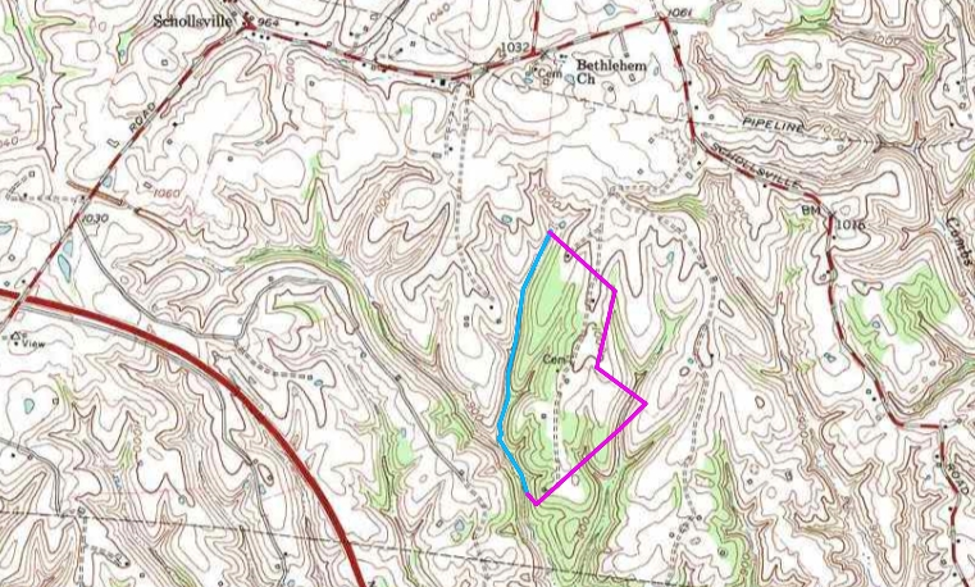
Moses died in 1861. His will directed the executor to provide for his children until they reached the age of twenty-one, then to use the remaining funds to buy farms for them. In 1863 the executor, still having on hand $4,700, purchased a tract of 107 acres at the northern end of Indian Old Fields, on the headwaters of Upper Howard’s Creek. The land was divided between Sarah Jane, Andrew and Permelia (Emily had died by that time).
After the Civil War, this land would come to support a sizeable black community known as “Dry Ridge.” Many of the residents worshiped at the Corinth CME Church, established at L&E Junction in 1883. The community gradually faded away in the 20th century; some of the departed remain in two family cemeteries. Moses Robinson’s descendants now number in the thousands. Many still hold an interest in the land Moses provided more than 150 years ago.
Moses Robinson’s Story
WINCHESTER BLACK HISTORY
AND HERITAGE COMMITTEE

© 2019-2026, ALL RIGHTS RESERVED,
Winchester Black History and Heritage Committee
Website Designed and managed by Graphic Enterprises